
• Skip to main content
Menu
  • Countertops
    • How It Works
    • Quartz
    • Granite
    • Quartzite
    • Marble
    • Soapstone
  • Cabinets
    • Shiloh
    • Fabuwood
    • Wolf
  • Services
    • How It Works
    • Countertop Replacement
    • Countertop Installation
    • Backsplash
    • Sinks & Plumbing
    • Supports & Brackets
    • 3D Slab Layout
  • Gallery
    • Kitchens
    • Bathrooms
    • Fireplaces
    • Outdoor Kitchens
GranitePro logo
Menu
  • Showrooms
    • Eldersburg
    • Columbia
  • Trade Program
  • About
    • About Us
    • Resources
    • Warranty
    • Contact
  • Contact Us
GranitePro logo
Menu
  • Countertops
    • How It Works
    • Quartz
    • Granite
    • Quartzite
    • Marble
    • Soapstone
  • Cabinets
    • Shiloh
    • Fabuwood
    • Wolf
  • Services
    • How It Works
    • Countertop Replacement
    • Countertop Installation
    • Backsplash
    • Sinks & Plumbing
    • Supports & Brackets
    • 3D Slab Layout
  • Gallery
    • Kitchens
    • Bathrooms
    • Fireplaces
    • Outdoor Kitchens
  • Showrooms
    • Eldersburg
    • Columbia
  • Service Areas
    • Carroll County
    • Howard County
    • Frederick County
    • Baltimore County
    • Montgomery County
    • Anne Arundel County
    • Southern Pennsylvania
  • About
    • About Us
    • Resources
    • Warranty
    • Contact
  • Get a Free Estimate

Quartzite

Oct 07 2024

Cost Of Quartzite Countertops In Maryland

The cost of quartzite countertops in Maryland ranges from $100-$250+ per square foot installed. This cost is variable depending on the type of quartzite used, the size of the project and the complexity involved during installation. 

For the most accurate quote on your quartzite countertops, reach out to GranitePro today. Our team of estimators is here to help you understand the full cost of your countertop project. Call for a free quote!

Additional Considerations

These prices generally include both materials and installation. The final cost can vary based on factors such as:

  • The specific type and quality of quartzite chosen
  • The complexity of the installation (e.g., cutouts for sinks or intricate edge profiles)
  • The size of the countertop area
  • Any additional features or customizations

Which Is More Expensive, Quartzite Or Granite Countertops?

When comparing the costs of granite and quartzite countertops, it’s essential to recognize that while both materials offer high quality and durability, their prices are influenced by different factors.

Granite Countertops:

  • Granite countertops typically cost between $50 and $150 per square foot installed.
  • The price is affected by the quality of the granite, the design’s complexity, and any additional features such as custom edging or finishes.
  • Granite is often less expensive than quartzite, largely due to its wide availability and the large-scale quarrying and processing, which help lower the cost per unit.

Quartzite Countertops:

  • Quartzite is generally more expensive than granite, with prices ranging from $100 to $250+ per square foot installed.
  • The higher cost is mainly due to the more labor-intensive natural quarrying process and the rarity of certain types of quartzite.
  • Quartzite may also require more maintenance, such as regular sealing, which can add to its long-term cost of ownership.

While installation costs for both granite and quartzite are comparable, the complexity of the project will significantly impact the final price. Overall, quartzite tends to be slightly more expensive due to the factors mentioned above.
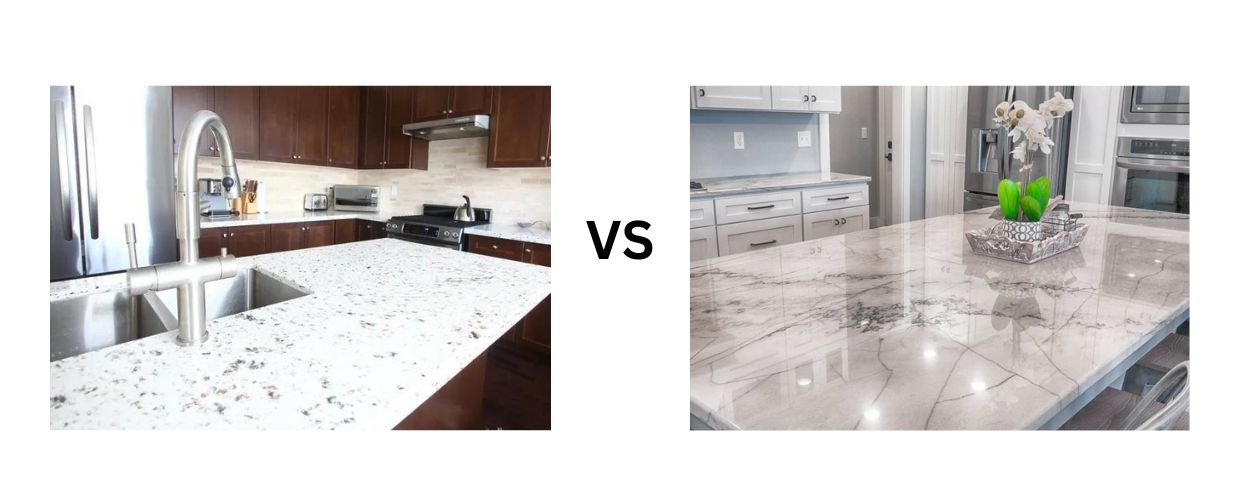
an image comparing quartz and quartzite

Which Is More Expensive, Quartzite or Quartz Countertops?

When comparing the costs of quartzite and quartz countertops, it’s important to understand that both materials have overlapping price ranges, making it difficult to declare one as definitively cheaper than the other. Quartz countertops typically cost between $55 and $150+ per square foot installed, with an average range of $90 to $116. Quartzite generally falls between $100 and $250+ per square foot installed.

While quartzite’s starting price is often higher than the most affordable quartz options, quartz offers a broader price range that can extend to more expensive high-end selections. For mid-range options, Quartz is definitely the more affordable option.

It is important to note that installation costs for quartzite can be higher, especially for complex designs, due to the need for custom cutting of the natural stone. Additionally, quartzite may incur higher long-term costs due to maintenance requirements like regular sealing.

Considering all factors—initial costs, installation, and long-term maintenance—quartz may often be the less expensive option overall.


What Are The Advantages Of Quartzite Countertops?

Quartzite countertops offer several advantages that make them a popular choice for homeowners:

Durability: Quartzite is an incredibly hard and durable natural stone, even more so than granite. It is highly resistant to scratches, chips, and abrasions, making it ideal for kitchen countertops where heavy use is common.

Heat Resistance: Quartzite can withstand high temperatures, so placing hot pots and pans directly on the surface won’t damage it. This heat resistance makes quartzite a practical choice for busy kitchens.

Natural Beauty: Quartzite has a unique and luxurious appearance, often resembling marble with its intricate veining and natural patterns. Unlike engineered materials, each slab of quartzite is one-of-a-kind, providing a distinct and elegant look to any space.

Low Maintenance: While quartzite does require sealing to protect it from stains, it is relatively low maintenance compared to other natural stones. With proper sealing, it resists stains, spills, and etching, making it easier to clean and maintain.

Resistant to UV Radiation: Quartzite is resistant to UV radiation, so it won’t fade or discolor over time when exposed to sunlight. This makes it an excellent choice for outdoor kitchens or areas with a lot of natural light.

Increased Home Value: Installing quartzite countertops can increase the value of your home. Its durability and natural beauty make it a desirable feature for potential buyers, often leading to a higher resale value.

Versatility: Quartzite is available in a wide range of colors and patterns, from soft whites and grays to vibrant shades of pink and green. This versatility allows it to complement various design styles, from traditional to modern.

What Are The Disadvantages Of Quartzite?

Cost: Quartzite tends to be more expensive than other countertop materials like granite and quartz. The higher price is due to the natural quarrying process, the rarity of certain types of quartzite, and the labor-intensive cutting and finishing required.

Susceptibility to Etching: Although quartzite is generally resistant to etching, certain varieties can still be affected by acidic substances like lemon juice or vinegar. This can result in dull spots or slight surface damage if spills are not cleaned up promptly.

Limited Color Options: While quartzite offers beautiful, natural patterns, the color palette is more limited compared to engineered materials like quartz. This can be a disadvantage if you’re looking for a specific color that isn’t available in quartzite.


Takeaway

The cost of quartzite countertops in Maryland typically ranges from $60 to $150 per square foot installed, with premium options reaching $200 or more. This price can vary depending on the specific type of quartzite, the size of your project, and the complexity of the installation.

For the most accurate quote on your quartzite countertops, contact GranitePro today. Our team of estimators is ready to help you understand the full cost of your countertop project. Call now for a free quote!


Categorized: Quartzite

May 19 2024

How To Seal Quartzite Countertops

Sealing quartzite countertops is a straightforward process that can be done with a few basic tools and materials. Here’s a step-by-step guide:

Clean the Surface: Thoroughly clean the quartzite countertop with a mild dish soap or stone cleaner and warm water. Remove all residues, dirt, and particles. Allow the surface to dry completely before applying the sealer.

Choose the Right Sealer: Select a penetrating or impregnating sealer specifically designed for natural stone. These sealers absorb into the stone to create a protective barrier against stains and moisture.

Apply the Sealer: Pour a small amount of the sealer onto the quartzite surface or onto a clean, soft cloth. Spread the sealer evenly over the countertop using a cloth, sponge, or paintbrush. Ensure complete coverage, including edges and corners.

Let it Absorb: Allow the sealer to penetrate the stone for the time specified by the manufacturer, usually around 15-20 minutes. If the surface begins to dry before the recommended time, apply more sealer to keep it wet.

Wipe Off Excess: After the sealer has been absorbed, wipe off any excess sealer with a clean, dry cloth. Leaving excess sealer on the surface can cause streaking and a cloudy appearance.

Allow to Cure: Let the sealer cure according to the manufacturer’s instructions, typically 24-48 hours. During this time, avoid placing anything on the countertop or exposing it to moisture.

Test the Sealing: After the curing period, perform a simple water test by placing a few drops of water on the surface. If the water beads up, the sealing is effective. If the water is absorbed, another coat of sealer may be necessary.

Maintain Regularly: Reapply the sealer as recommended, usually once a year, or according to the usage and type of sealer used. Regular cleaning with mild soap and water will help maintain the protective layer.

By following these steps, you can effectively seal your quartzite countertops, helping to protect them from stains and moisture while preserving their natural beauty.


What Sealant To Use on Quartzite?

For sealing quartzite countertops, you should use a high-quality penetrating or impregnating sealer designed specifically for natural stone. These sealers penetrate deep into the pores of the stone, creating a protective barrier against stains and moisture without altering the natural appearance of the quartzite. Here are some recommended types of sealers:

Impregnating Sealers

These sealers penetrate deep into the stone’s pores, providing long-lasting protection against water and oil-based stains.

Ideal for kitchen countertops where spills are frequent.

Fluoropolymer-Based Sealers

These sealers offer excellent protection against both water and oil-based stains.

Known for their durability and typically provide longer-lasting protection compared to standard sealers.

Silane/Siloxane Sealers

These breathable sealers penetrate the stone and provide protection against water and stains without forming a surface film.

Effective for both indoor and outdoor quartzite surfaces.

Popular Sealing Brands

Dry-Treat STAIN-PROOF Original: A premium impregnating sealer that offers long-lasting protection.

Miracle Sealants 511 Impregnator: A widely used sealer that provides excellent protection against water and oil-based stains.

Aqua Mix Sealer’s Choice Gold: A high-performance sealer that is ideal for both commercial and residential use.

Using a high-quality penetrating or impregnating sealer will help protect your quartzite countertops and maintain their beauty and durability.


How Long to Wait After Sealing Quartzite Countertops?

After sealing quartzite countertops, it is crucial to allow the sealer to cure properly to ensure optimal protection. Generally, you should allow the sealer to penetrate and dry for about 15-20 minutes, wiping off any excess with a clean, dry cloth to prevent streaking. 

The curing period, during which the countertop should be left undisturbed, typically ranges from 24 to 48 hours. During this time, avoid placing any items on the countertop or exposing it to moisture. After the initial curing period, the countertop can be used normally, though some sealers may continue to develop their full protective properties over several days. To ensure the best results, keep the area well-ventilated, avoid water and spills, and clean the countertop gently with mild dish soap and water after the curing period. 


How Often Should You Seal Quartzite Countertops?

Quartzite countertops should generally be sealed once a year to maintain their protective barrier against stains and moisture. Regular sealing helps keep the surface in pristine condition and makes it easier to clean. High-traffic areas or countertops that are frequently used may require more frequent sealing, possibly every six months, to ensure optimal protection. Signs that your quartzite may need resealing include a dull appearance, increased susceptibility to staining, or water no longer beading on the surface​.


Takeaway

To seal quartzite countertops, first thoroughly clean the surface with mild dish soap or stone cleaner and allow it to dry completely. Choose a penetrating or impregnating sealer designed for natural stone, which absorbs into the stone to create a protective barrier against stains and moisture. Apply the sealer evenly over the countertop using a cloth, sponge, or paintbrush, ensuring complete coverage.


 Allow the sealer to penetrate for about 15-20 minutes, then wipe off any excess to prevent streaking. Let the sealer cure for 24-48 hours, during which time avoid placing items on the countertop or exposing it to moisture. 


After curing, perform a water test to check the effectiveness of the sealing; if water is absorbed, a second coat may be necessary. Regular maintenance includes reapplying the sealer once a year or as needed, and cleaning the countertop with mild soap and water to maintain the protective layer​ 

Categorized: Quartzite

May 19 2024

Does Quartzite Stain?

Yes, quartzite can stain. Although a hard and durable natural stone, quartzite is still porous and can absorb liquids, leading to staining. Common sources of stains include oils, acidic substances like vinegar and citrus juices, and colored liquids such as coffee, tea, and wine. 

How To Prevent Staining Your Quartzite Counter Tops

To minimize the risk of staining, it’s important to seal quartzite countertops regularly. Sealing creates a protective barrier against stains and moisture. Additionally, promptly cleaning up spills and using coasters, cutting boards, and trivets can help protect the surface. Regular maintenance and proper care will help preserve the natural beauty of quartzite.

Can You Get Stains Out of Quartzite?

Yes, you can often remove stains from quartzite, though the success depends on the type and severity of the stain. Here are some methods for removing common stains:

Oil-Based Stains: For stains from cooking oils or greasy substances, create a paste using baking soda and water. Apply the paste to the stain, cover it with plastic wrap, and let it sit for 24 hours before wiping it off with a damp cloth.

Organic Stains: For stains from coffee, tea, wine, or fruit, use a poultice made from hydrogen peroxide and a few drops of ammonia. Apply the poultice to the stain, cover it with plastic wrap, and let it sit for 24 hours. Then, wipe it off with a damp cloth.

Acidic Stains: For etching caused by acidic substances like vinegar or citrus juices, a professional stone cleaner or a poultice may be required. If the etching is severe, you might need to contact a professional to polish and restore the surface.

General Stains: A mixture of mild dish soap and warm water can often remove less severe stains. Gently scrub the stained area with a soft cloth or sponge.

If stains persist despite these efforts, it may be necessary to consult a professional stone care specialist for further treatment.


Quartzite Staining FAQs

Does Quartzite Stain More Than Granite?

Quartzite tends to be more prone to staining than granite due to its higher porosity. Proper sealing and maintenance can help mitigate this risk for both materials, but granite generally offers better natural resistance to stains.

Does Quartzite Stain With Water?

Quartzite is less likely to stain with water compared to other substances like oils, acids, or colored liquids. However, because quartzite is porous, prolonged exposure to water can potentially lead to water marks or slight discoloration, especially if the stone is not properly sealed. 

Does Quartzite Stain With Coffee?

Yes, coffee can stain quartzite countertops. Although quartzite is a hard and durable natural stone, it is still porous and can absorb liquids, leading to potential staining. Coffee, being a dark and pigmented liquid, can leave noticeable stains if not cleaned up promptly.

Can I Use Clorox Wipes on Quartzite?

It is generally not recommended to use Clorox wipes or other harsh chemical cleaners on quartzite countertops. Clorox wipes contain chemicals that can be too abrasive and may damage the sealant on the surface of the quartzite, potentially leading to dullness and reduced protection against stains.

Can You use Windex on Quartzite?

Using Windex or similar glass cleaners on quartzite countertops is not recommended. These cleaners often contain ammonia, alcohol, or other harsh chemicals that can degrade the sealant on quartzite, potentially leading to dullness, discoloration, and reduced protection against stains.

Can You Use Rubbing Alcohol to Clean Quartzite?

Using rubbing alcohol to clean quartzite countertops is generally safe when diluted properly. Mix equal parts of rubbing alcohol (70% isopropyl alcohol) and water in a spray bottle, and optionally add a few drops of mild dish soap for extra cleaning power. 

Spray the solution onto the quartzite surface, wipe it down with a soft cloth or non-abrasive sponge, and then rinse with clean water and dry with a soft cloth to prevent water spots. Test the solution on a small, inconspicuous area first to ensure it doesn’t affect the sealant or finish, and avoid using rubbing alcohol as your primary cleaner to prevent potential long-term effects on the sealant. 

Regular maintenance with mild dish soap and water, supplemented by occasional use of rubbing alcohol for deeper cleaning or disinfecting, will help maintain the beauty and longevity of your quartzite countertops.


Categorized: Quartzite

May 15 2024

Does Quartzite Need To Be Sealed

Yes, quartzite should be sealed. Despite being a very hard and durable natural stone, quartzite is still porous and can absorb liquids, which may lead to staining. Sealing the quartzite helps to prevent this by creating a protective barrier on the surface, making it more resistant to moisture and stains. It’s generally recommended to seal quartzite countertops at least once a year, depending on the usage and the type of sealer used. Regular maintenance and resealing help preserve the stone’s beauty and longevity.


How Often Should Quartzite Be Sealed?

Quartzite should generally be sealed once a year. However, the exact frequency can vary based on several factors:

Usage

High-traffic areas like kitchen countertops may require more frequent sealing compared to low-traffic areas.

Type of Sealer 

Some sealers last longer than others. Premium sealers might offer protection for up to 3-5 years, while standard sealers typically need reapplication annually. 

For quartzite countertops, penetrating or impregnating sealers are the most effective. These sealers soak into the stone, creating a barrier that protects against stains and moisture without altering the natural appearance of the quartzite.

Manufacturer’s Recommendations

Always follow the specific guidelines provided by the manufacturer or the installer of the quartzite.

To determine if your quartzite needs resealing, you can perform a simple water test. Place a few drops of water on the surface and see if they bead up or soak into the stone. If the water is absorbed, it’s time to reseal.


Can You Seal Quartzite Yourself?


Yes, you can seal quartzite yourself. The process is straightforward and can be done with a few basic tools and materials. Here are the steps to seal quartzite countertops:

Clean the Surface: Thoroughly clean the quartzite with a mild detergent or stone cleaner and let it dry completely. Ensure there are no residues or particles on the surface.

Choose the Right Sealer: Select a penetrating or impregnating sealer specifically designed for natural stone.

Apply the Sealer: Use a clean, soft cloth or a paintbrush to apply the sealer evenly over the surface. Follow the manufacturer’s instructions for application.

Let it Absorb: Allow the sealer to penetrate the stone for the recommended amount of time, usually 15-20 minutes.

Wipe Off Excess: After the sealer has been absorbed, wipe off any excess sealer with a clean, dry cloth.

Allow to Cure: Let the sealer cure according to the manufacturer’s instructions, typically 24 hours, before using the countertop.

Sealing quartzite yourself can save money and help maintain the beauty and durability of your countertops.


What Type Of Sealer Is Used On Quartzite?

As mentioned above, penetrating or impregnating sealers are the best choice. These sealers absorb into the stone to create a barrier against stains and moisture without changing the natural appearance of the quartzite. Here are the main types of recommended sealers:

Impregnating Sealers: These penetrate deep into the stone’s pores, providing long-lasting protection against water and oil-based stains, making them ideal for kitchen countertops where spills are frequent.

Fluoropolymer-Based Sealers: Known for their durability, these sealers offer excellent protection against both water and oil-based stains and typically last longer than standard sealers.

Silane/Siloxane Sealers: These breathable sealers penetrate the stone and protect against water and stains without forming a surface film, making them effective for both indoor and outdoor quartzite surfaces.


Does Quartize Stain?

Yes, quartzite can stain. Although quartzite is a hard and durable natural stone, it is still porous, which means it can absorb liquids that may lead to staining. Common sources of stains include:

Oils: Cooking oils and other greasy substances can seep into the stone and cause dark stains.

Acidic Substances: Vinegar, citrus juices, wine, and other acidic substances can etch and stain the surface.

Colored Liquids: Coffee, tea, wine, and other pigmented liquids can leave noticeable stains if not cleaned up promptly.

To minimize the risk of staining, it is important to seal quartzite countertops regularly and clean up spills immediately. Using coasters, cutting boards, and trivets can also help protect the surface. Regular maintenance and proper care will help preserve the natural beauty of quartzite.


Takeaway

Quartzite should be sealed to protect it from stains and moisture because, despite its hardness and durability, it is still a porous stone. Sealing creates a protective barrier, preserving the stone’s natural beauty and longevity. Generally, quartzite countertops should be sealed once a year, though this can vary based on usage, the type of sealer, and manufacturer’s recommendations. For high-traffic areas like kitchens, more frequent sealing might be necessary, while premium sealers can offer protection for up to 3-5 years.

Categorized: Quartzite

Apr 28 2024

What Are Quartzite Countertops?

Quartzite countertops are a popular choice in home design, made from a natural stone known as quartzite. This stone is formed through the metamorphism of quartz-rich sandstone, which undergoes extreme heat and pressure in the earth to become hard and dense. Quartzite has a similar look to marble but offers greater durability and resistance to wear and tear, making it an excellent choice for countertops.

The appeal of quartzite lies in its natural beauty, with each slab having unique patterns and colors, ranging from whites and grays to blues, greens, and even pinks. It’s also highly resistant to heat, scratches, and staining, although it may require sealing to maintain its non-porous properties and prevent etching or staining over time. Overall, quartzite combines the elegance of natural stone with robust performance characteristics, making it suitable for kitchens, bathrooms, and other areas where durability and aesthetics are important.


Why Choose Quartzite Countertops?

Choosing quartzite countertops for your home can offer several advantages, particularly in terms of aesthetics, durability, and maintenance. Here’s why they might be the right choice:

Natural Beauty: Quartzite is renowned for its striking natural beauty. Each slab of quartzite has a unique veining and color palette, ranging from subtle whites and grays to dramatic blues, greens, and reds. This makes each countertop one-of-a-kind and adds a luxurious and elegant touch to any interior design.

Durability: Quartzite is extremely durable. It is harder than granite and resists wear and tear very well, making it suitable for high-traffic areas like kitchens. It withstands heat, which is ideal for cooking environments where hot pots and pans are placed directly on the surface.

Longevity: Due to its hardness and durability, quartzite lasts a long time without showing signs of aging or damage. It can withstand the daily rigors of kitchen use without scratching or chipping easily.

Value Addition: Quartzite can add significant value to your home. Its luxury appeal and durability make it a desirable feature for potential home buyers, should you decide to sell your home in the future.

Maintenance: Quartzite requires relatively low maintenance. Regular cleaning with mild soap and water is typically sufficient. Though it requires sealing to prevent stains, this is only needed periodically (once every one to two years, depending on usage).

While quartzite is generally more expensive than some other countertop materials, its longevity and aesthetic appeal can make it a worthwhile investment for those looking to enhance the beauty and functionality of their homes.

an image comparing quartz and quartzite

Quartzite Vs Quartz

Quartzite and quartz countertops each offer unique advantages, making them popular choices for home interiors, but they differ significantly in origin, appearance, durability, maintenance, cost, and environmental impact. Quartzite is a natural stone formed from sandstone that has undergone intense heat and pressure, featuring unique veining and colors that vary with each slab. Quartz, on the other hand, is an engineered material composed of about 90% natural quartz crystals mixed with resins and pigments, offering a more uniform appearance and a wider range of colors.

In terms of durability, quartzite is exceptionally hard and scratch-resistant, excelling in kitchens where heat resistance is crucial. Quartz, while durable, is less tolerant to high temperatures and may require protection from hot items to prevent damage. Maintenance-wise, quartzite needs periodic sealing to maintain its non-porous properties and prevent staining, whereas quartz requires little maintenance due to its non-porous nature, eliminating the need for sealing.

From a cost perspective, quartzite tends to be more expensive due to its natural rarity and the quarrying process involved, while quartz is generally more budget-friendly and offers cost-effective luxury with high-end looks that mimic natural stone. The environmental impact also varies; quartzite has a lower environmental footprint in its natural state but involves significant quarrying, whereas quartz requires extensive processing and uses synthetic materials.

Quartzite Vs Granite 

Quartzite and granite are both popular choices for countertops due to their natural beauty and durability, but they have distinct characteristics that may influence your decision. Quartzite is a metamorphic rock formed from sandstone that has been exposed to high heat and pressure, resulting in a strong and dense material. It is known for its crystalline appearance, often resembling marble but offering greater durability. Quartzite’s colors typically include white and grey tones with hints of pink or red, depending on the iron oxide content.

Granite, on the other hand, is an igneous rock composed mainly of quartz, feldspar, and mica. It is one of the hardest materials available for countertops, known for its grainy appearance and the depth of its colors and patterns. Granite offers a wide range of color options and has a slightly rougher texture than quartzite.

When it comes to durability, both materials are highly resistant to scratches and chips. Quartzite, however, is generally harder than granite, making it slightly more resistant to wear and tear. Both stones withstand heat well, making them ideal for kitchen environments where hot pots and pans are common.

Maintenance for both materials involves regular sealing to prevent staining. Quartzite is more porous than granite and may require more frequent sealing to keep its non-porous qualities. Granite also needs sealing but is less likely to absorb liquids quickly, giving you a bit more time to clean up spills.

In terms of cost, both quartzite and granite are premium materials, and their prices can vary widely depending on the rarity of the stone and the complexity of the installation. Generally, quartzite can be more expensive due to its rarity and the popularity of its elegant, marble-like appearance.


How Long Do Quartzite Countertops Last?

Quartzite countertops are renowned for their durability and longevity. With proper maintenance and care, they can last for decades—often as long as the lifetime of the home itself. Quartzite is one of the hardest materials used in countertop applications, making it highly resistant to scratches, chips, and general wear and tear.

The key to ensuring the longevity of quartzite countertops is regular maintenance, which includes sealing the stone periodically. Sealing helps to prevent staining and moisture absorption. Depending on the level of use and exposure to staining agents, quartzite countertops might need to be sealed once a year or every few years.

Given its natural strength and resistance to heat, quartzite is particularly well-suited for kitchens where durability is a critical factor. With its ability to withstand the rigors of daily kitchen activities, a quartzite countertop can remain functional and beautiful for many years, making it a worthwhile investment for homeowners looking for both longevity and aesthetic appeal in their countertop choices.


Can You Put Hot Pans Directly On Quartzite Countertops?

Yes, you can place hot pans directly on quartzite countertops without worrying about heat damage. Quartzite is highly resistant to heat, which is one of its major advantages as a countertop material, especially in kitchens. This natural stone’s durability under high temperatures makes it suitable for handling hot cookware directly from the stove or oven.

However, despite its heat resistance, it’s generally a good practice to use trivets or hot pads when placing very hot items on any countertop surface. This precaution helps prevent any potential risk of thermal shock or other damages that could occur from extreme temperatures, ensuring that your quartzite countertop remains in pristine condition for a longer time.


Conclusion

Quartzite countertops offer a superb blend of beauty and durability, making them an excellent choice for those looking to combine aesthetic appeal with functionality in their kitchen or bathroom. As a natural stone, quartzite features unique patterns and colors, ensuring that no two countertops are exactly alike, which adds an element of exclusivity and luxury to any space. Its exceptional hardness and resistance to heat make it ideal for the demands of a busy kitchen, allowing homeowners to place hot pans directly on the surface without damage.


While quartzite requires some maintenance, such as regular sealing to prevent stains and extend its lifespan, the effort is well worth it given the stone’s longevity and the value it adds to a home. Moreover, its natural origins make each slab a piece of earth’s history, bringing an irreplaceable and timeless quality to interior designs. Ultimately, choosing quartzite countertops is an investment in both style and substance, providing enduring beauty and practicality that will satisfy homeowners for years to come.


Categorized: Quartzite

  • Go to page 1
  • Go to page 2
  • Go to Next Page »
GranitePro logo

The countertop experts at GranitePro in Eldersburg, Maryland have built the foundation of our company upon providing our clients with quality countertops and cabinets, affordable pricing, and excellent customer service.

At GranitePro we have one basic principle, Make It Easy. From start to finish, we are here to help you every step of the way. It is as simple as that!
Facebook-f Linkedin-in Instagram
Company
Menu
  • About Us
  • Reviews
  • Gallery
  • How It Works
  • Trade Program
  • Blog
  • Contact Us
Materials
Menu
  • Cabinets
  • Countertops
  • Quartz
  • Granite
  • Marble
  • Dekton
  • Porcelain
Our Services
Menu
  • Howard County
  • Carroll County
  • Frederick County
  • Montgomery County
  • Baltimore
  • All Service Areas
Our Locations
Eldersburg
  • 5320 Enterprise St. Suite B Eldersburg, MD 21784
  • (410) 875-7579
Columbia
  • 6822 Oak Hall Ln Suite C, Columbia, MD 21045
  • (443) 516-6737
Get Your Free Quote

Copyright ©2026 GranitePro Remodeling. All rights reserved. | Accessibility Statement MHIC #131156

Request a Quote

"*" indicates required fields

This field is for validation purposes and should be left unchanged.
Name*