Soapstone Countertops in Maryland — A Distinctive Choice
Soapstone is one of the oldest countertop materials used in American kitchens — heat-resistant, non-porous, and never needs sealing. Periodic oiling keeps the patina even — and that's the extent of the upkeep. Its matte, sophisticated look is impossible to replicate.
Soapstone is non-porous and heat-resistant — it never needs sealing. Periodic oiling with mineral oil is recommended to maintain an even patina, but it's a simple and quick process. It darkens naturally over time, developing a rich patina that most homeowners love. It's a niche choice with a distinct aesthetic that's impossible to fake with engineered materials.
Soapstone has been used in American kitchens since the 1800s — old farmhouse sinks, science lab counters, and wood stove surrounds are often soapstone. Its softness (it's one of the softer natural stones) is actually part of its character: it develops a patina over time, and scratches can be sanded out or simply embraced as part of the surface's story.
It's not for everyone. But homeowners who choose soapstone tend to love it deeply — it's one of those materials with a dedicated following precisely because it's so different from everything else.
◎
Truly non-porousSoapstone never needs sealing and won't absorb stains, bacteria, or liquids. Periodic oiling is recommended to maintain an even patina.
🔥
Fully heat-resistantOne of the most heat-resistant countertop materials available. Hot pans, canning, baking — no damage.
◇
Chemical-resistantDoesn't react to acids, alkalis, or chemicals. Used in science labs and industrial applications for this reason.
✎
Living patinaSoapstone darkens naturally over time. Mineral oil speeds the process. The aged look is part of the material's appeal.
What soapstone actually looks like
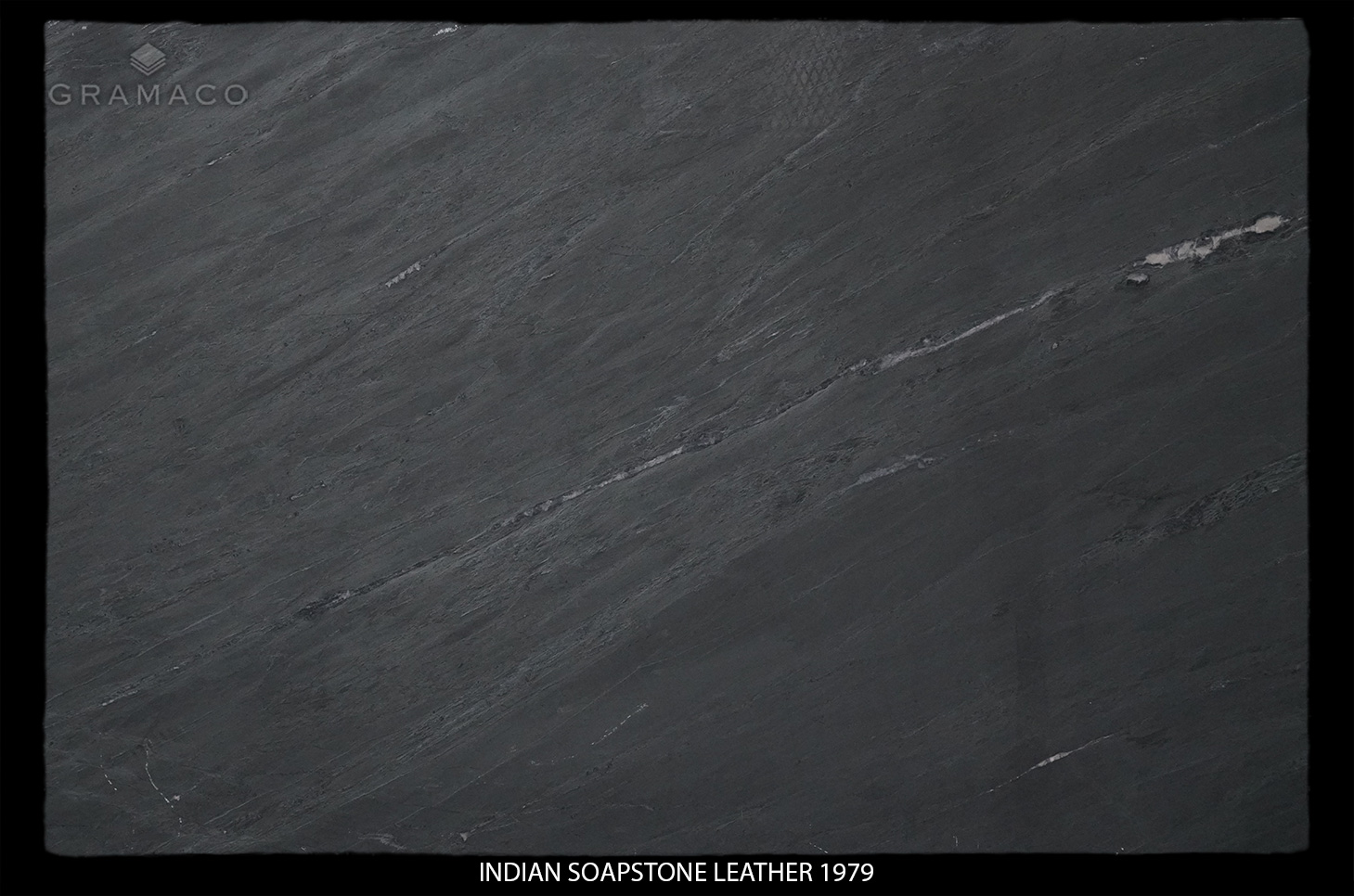
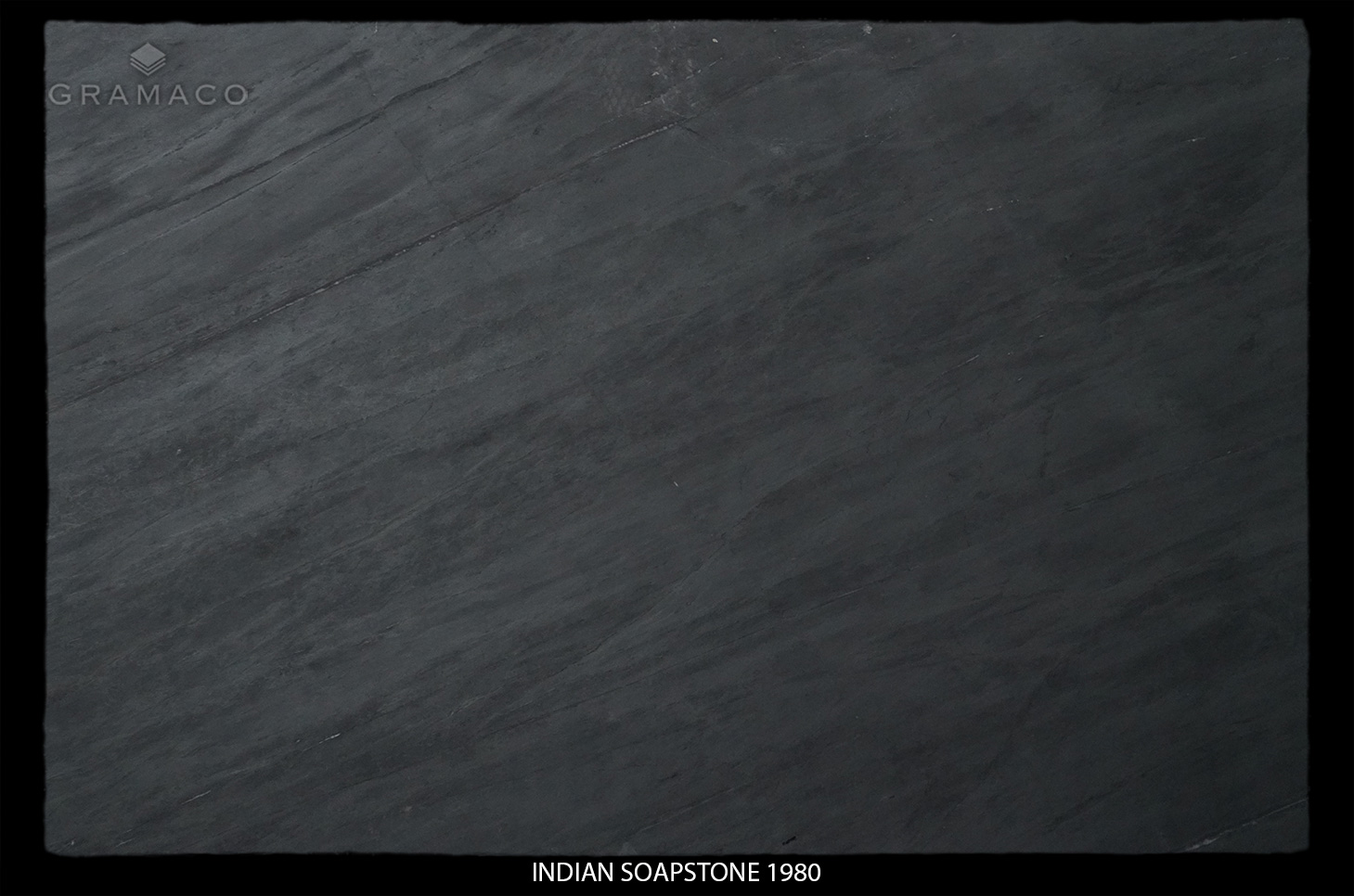
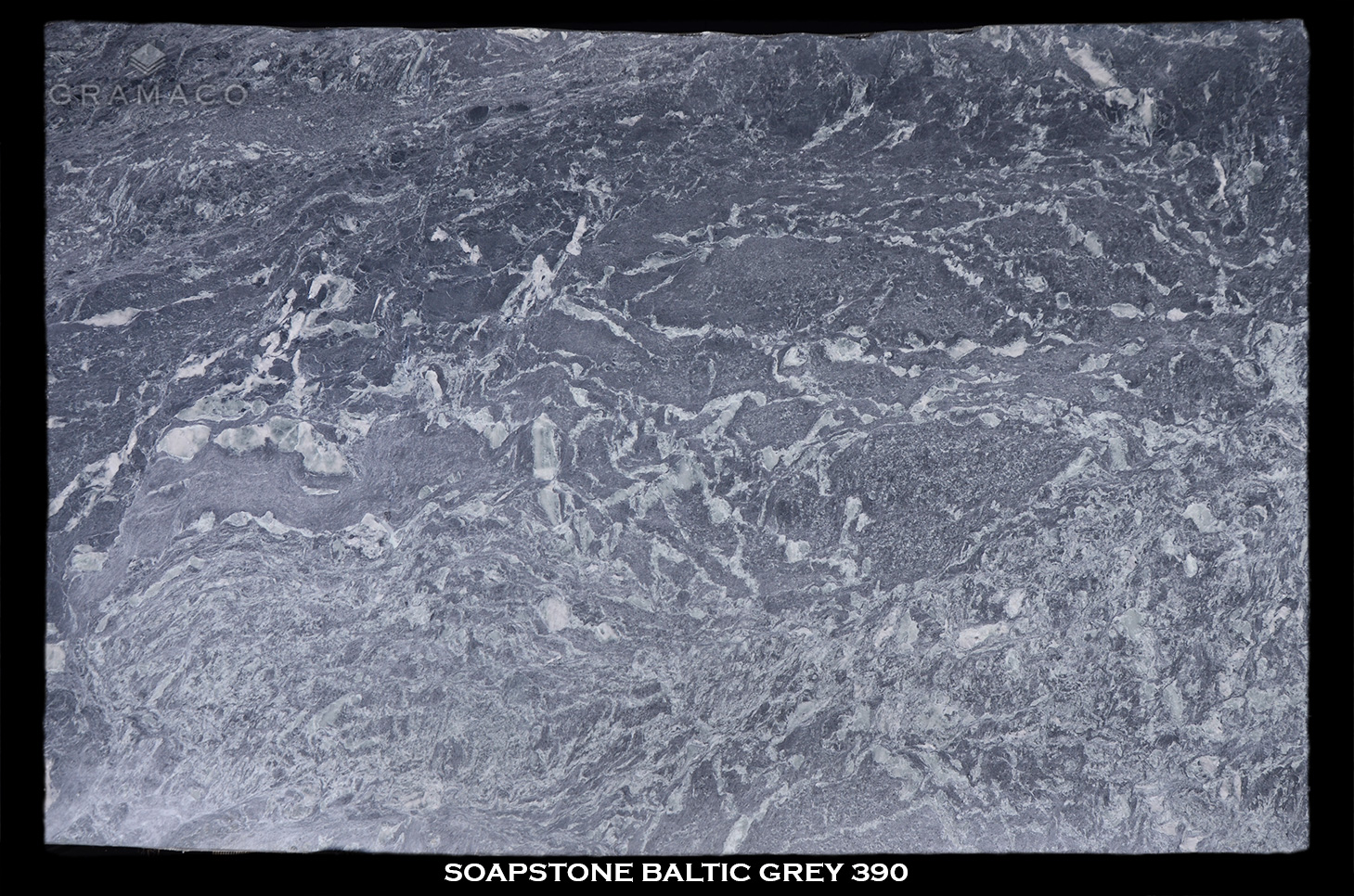
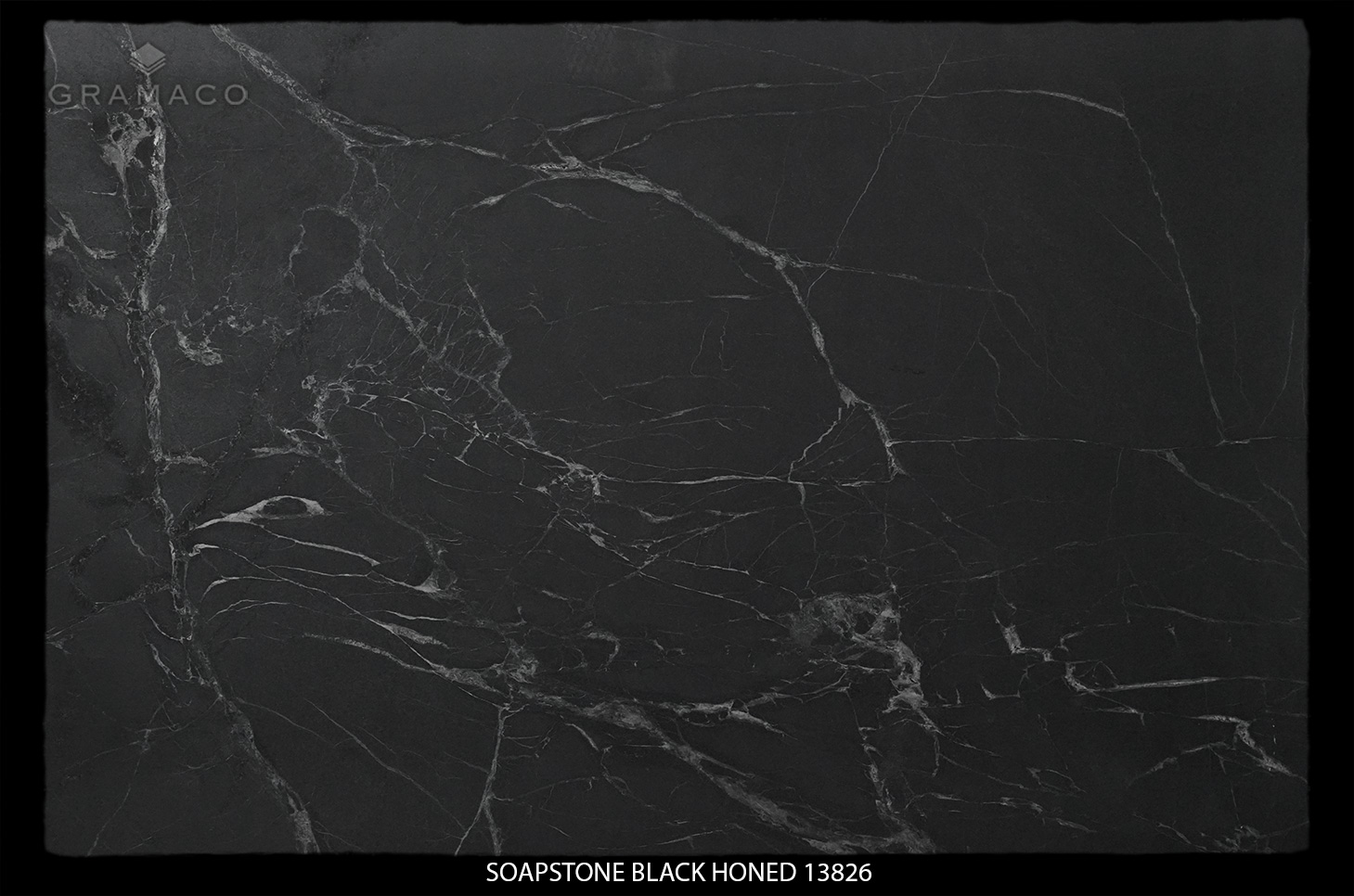
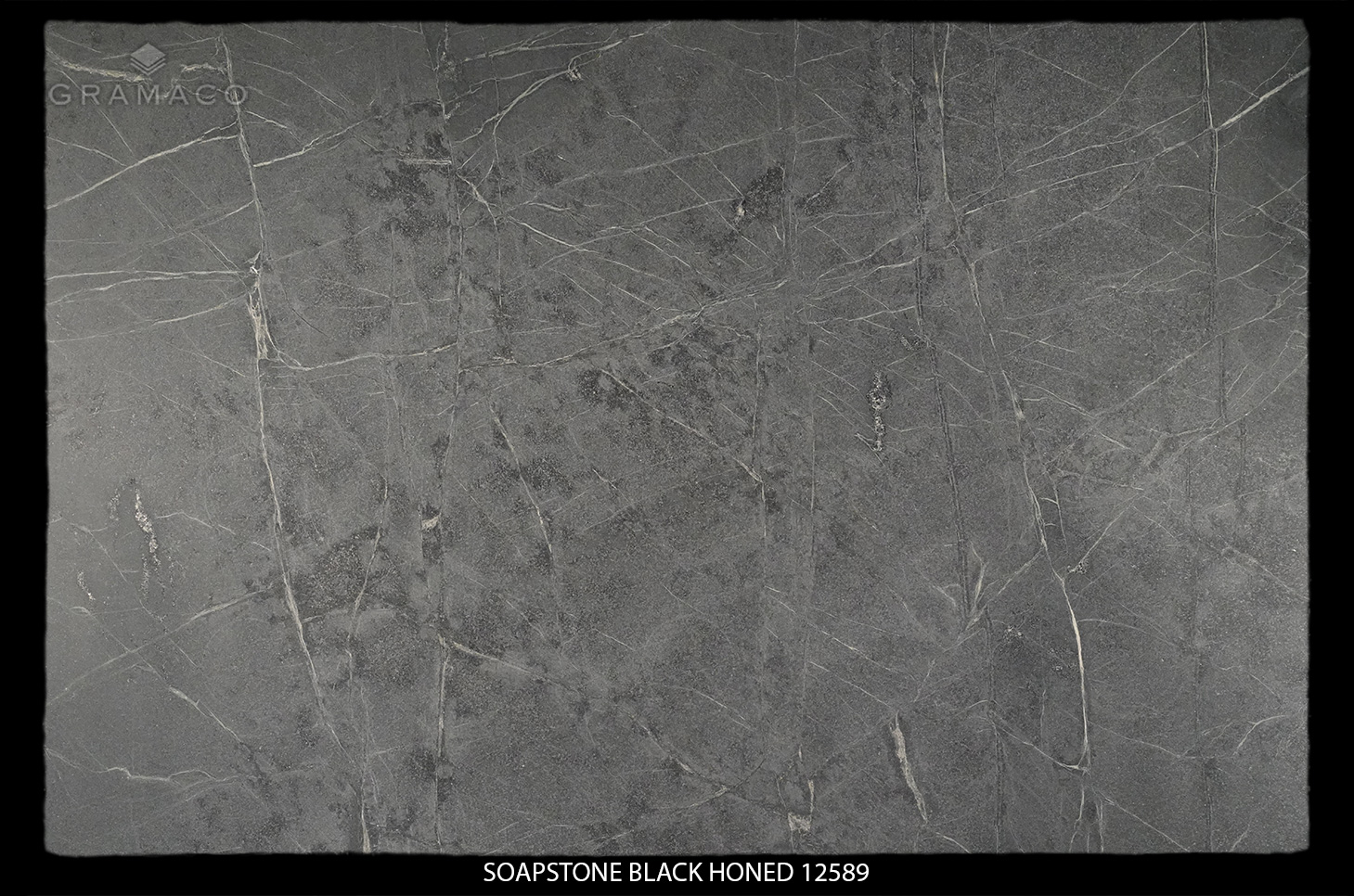
Soapstone comes in shades ranging from light gray to dark charcoal, with subtle veining in white, gray, or green. It has a distinctive matte, almost velvety surface feel that's immediately recognizable — and impossible to replicate with paint, laminate, or engineered stone.
New soapstone is typically medium gray. Untreated, it will darken over time in areas of use, creating an uneven patina. Most homeowners treat with mineral oil at installation to speed and even out the darkening process — bringing the stone to a rich, uniform dark gray or charcoal almost immediately. This treatment can be repeated whenever you want to refresh the look.
The honest trade-offs
Soapstone scratches. It's a soft stone — knives, keys, and hard objects will leave marks. These can be sanded out with fine sandpaper, but you need to be comfortable with the idea that your countertop will show use over time.
Limited color range. Soapstone comes in grays and charcoals. If you want a warm brown, a dramatic veined pattern, or a light cream, soapstone isn't the right material.
Mineral oil maintenance. Not required, but recommended periodically to maintain an even patina. This is simple and takes minutes.
Less available than granite or quartz. Fewer slab options, fewer suppliers. We carry it, but the selection is smaller than our granite or quartz lines.
Want to see soapstone in person?
The feel and look of soapstone has to be experienced in person — photos don't capture the surface texture.
"Homeowners who choose soapstone tend to love it deeply — it's one of those materials with a dedicated following."— Why soapstone has outlasted every countertop trend
Frequently asked questions
Soapstone never needs sealing — it's non-porous and won't absorb liquids or stains. However, periodic oiling with mineral oil is recommended to maintain an even, consistent patina. It's a quick and simple process, not a burden — but it's worth knowing upfront.
Yes — soapstone can be sanded with fine-grit sandpaper to remove scratches and surface marks. This is a homeowner-doable job. A light sand and a wipe of mineral oil and the area looks fresh again. It's one of the unique advantages of soapstone's softness.
No — and that's intentional. Soapstone darkens naturally over time, especially in areas of heavy use. Applying mineral oil at installation speeds and evens this process, bringing the stone to its aged color quickly. Many homeowners love the evolving look; others prefer to manage it with periodic oiling for consistency.
Soapstone is UV-stable and handles outdoor conditions, but granite is typically our first recommendation for outdoor kitchens due to its wider availability and harder surface. Ask us about outdoor-specific options when you visit.
Soapstone ranges from light gray to dark charcoal, with subtle veining in gray, white, or green. It doesn't come in warm tones, dramatic veined patterns, or light creams — if those are your priority, granite, quartzite, or marble is a better fit. Soapstone's palette is intentionally simple and sophisticated.
Color Library
Browse our soapstone selection
Soapstone comes in a focused range of grays and charcoals. See every option in person at either showroom.
!
These are representative photos only. Natural stone is unique — every slab looks different. The actual stone available in our warehouse will vary from what you see here. We strongly recommend visiting a showroom or our slab warehouse to see the real material in person before making any selection.
Indian Black Soapstone 1979
Indian Black Soapstone 1980
Soapstone Baltic Grey
Soapstone Black Honed 13826
Soapstone Black Honed
Want to see it in person? Visit our Eldersburg or Columbia showroom — the texture and feel of soapstone has to be experienced firsthand.
Visit a showroom to see and feel soapstone in person, or schedule a free in-home estimate. Our designers will help you decide if it's the right material for your project.